

Koobi Fora Faculty & Staff
Our faculty members on site include leading experts in hominin physiology, vertebrate paleontology, sedimentary geology, taphonomy, paleolithic archaeology, landscape archaeology, zooarchaeology, bioarchaeology and many more fields. Browse individual faculty pages to view recent publications.
Core Team

David R. Braun
Professor of Anthropology, The George Washington University
David R. Braun has conducted fieldwork in Kenya, Ethiopia, South Africa, Mozambique and Guinea. His research focuses on the origins of technology in hominins and the implications for the evolution of our genus. His research incorporates a variety of excavation techniques as well as geochemical approaches.
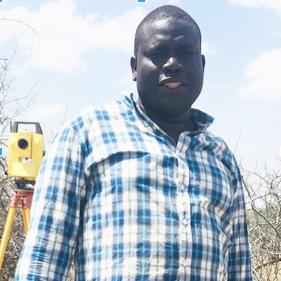
Emmanuel K. Ndiema
Senior Research Scientist and Head of Department of Earth and Natural Sciences, National Museums of Kenya
Emmanuel K Ndiema is an archaeologist who has worked in the Turkana Basin for more than 19 years. His fieldwork in East Turkana has been focused on investigating human cultural responses to climatic variability during the last 10,000 years. He is particularly interested in the subsistence and land use patterns among pastoralist communities
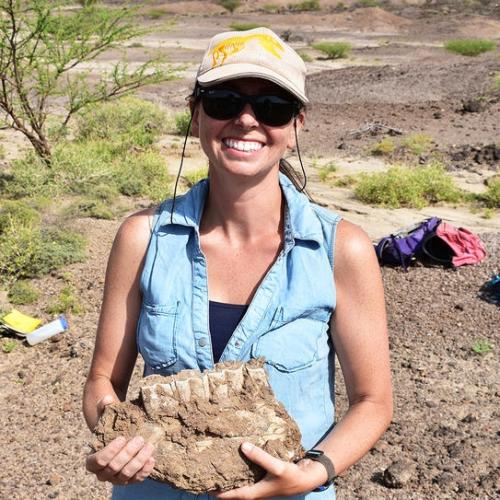
Ashley Hammond
Biological Anthropology Curator, American Museum of Natural History
Ashley Hammond is a paleoanthropologist and functional morphologist who has worked in the Turkana Basin for more than 10 years. Her fieldwork in East Turkana has been focused on reconstructing Pliocene and early Pleistocene hominin evolutionary history and paleoenvironments.
Asher Rosinger
Assistant Professor of Biobehavioral Health and Anthropology, Pennsylvania State University
I run the human biology component of KFFS where we examine water and food insecurity, nutrition, and health of local pastoralists - Daasanach - and evaluate how environmental stressors like water quality and heat stress affect their health and human biology


Herman Pontzer
Associate Professor of Evolutionary Anthropology, Duke University
Herman Pontzer is a human evolutionary biologist who works with hunter-gatherers, pastoralists and other small-scale societies to investigate connections between lifestyle, diet, physiology and health. His work with the Koobi Fora Field School centers on biological and ecological research with the Daasanach pastoralist community in the East Turkana region.
Matthew Douglass
Director, Master of Applied Science
Dr. Douglass serves as the director of the UNL Master of Applied Science Program and is the primary coordinator for the Science for Educators Specialization. He teaches classes in earth science, climate science, and Great Plains history and prehistory at the University of Nebraska.
He directs a project on the unique socioecological contexts of Daasanach pastoralism in the east Turkana Basin of Kenya and is a team member studying human biology in the same region. These projects include research on human food and water insecurity, range management and environmental monitoring, human health, and GPS tracking of human and livestock mobility. Through this work he has involved cohorts of Nebraska teachers for immersive research and training experiences that ultimately result in K-12 curriculum units taught in classrooms throughout Nebraska.
He also directs a related project documenting Daasanach stone tool production and use. The Daasanach represent one of the last populations on Earth to retain regular use of flake and core technology, which they utilize for a variety of everyday tasks. Through interviews and video documentation, his research documents indigenous perspectives onto one of humanity's most significant and endangered technological achievements.

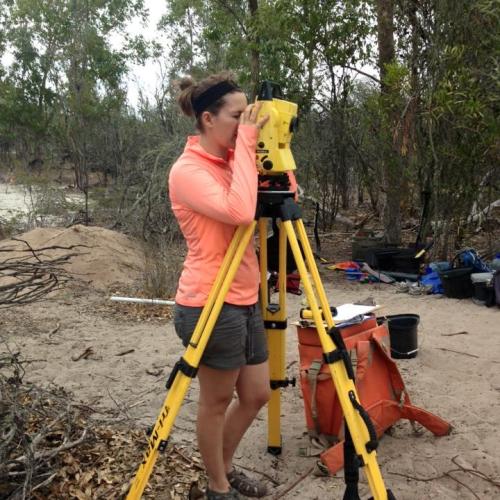
Maryse Biernat
Graduate Student, School of Human Evolution and Social Change and the Institute of Human Origins at Arizona State University
Maryse Biernat has participated in field research at Koobi Fora for five years, focusing on reconstructing and understanding changing Plio-Pleistocene mammalian communities through time.
Andrew Barr
Assistant Professor of Anthropology, The George Washington University
Andrew Barr studies the paleoenvironmental context of human evolution. He has conducted paleoanthropological field research in the Turkana Basin and in the Afar Depression of Ethiopia since 2009.


Rahab Kinyanjui
Senior Research Scientist, Palynology and Paleobotany Section, Earth Sciences Department at the National Museums of Kenya
Training and mentoring students on interactions between humans and vegetation both in present and in the past, study modern ecology and reconstruct past ecosystems using plant remains.
Amanda McGrosky
Assistant Professor of Biology, Elon University
At KFFS, Amanda McGrosky primarily works with the human biology team to understand how physical activity and energy expenditure contribute to differences in health and life history outcomes, but she also still has interest in paleoecology.
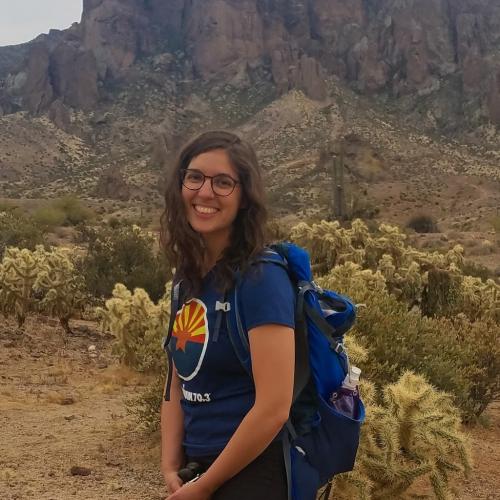

Frances Forrest
Assistant Professor of Biological Anthropology, Fairfield University
I am a zooarchaeologist studying fauna from early hominin archaeological sites in Africa. My research interests focus on reconstructing the ecology of Early Stone Age hominins in Africa by exploring the relationship among the hominins, the adjacent mammalian community, and the physical environment. I am particularly interested in the significance of meat in the diet of early members of the genus Homo and the degree to which environmental conditions may have influenced early human access to large herbivores.
Dan Valentin Palcu Rolier
Senior Geoscientist
As Senior Geoscientist at the Koobi Fora Field School, I lead the geological and stratigraphic components of our interdisciplinary research and teaching program. My work focuses on geological mapping, stratigraphy, geochronology, and paleogeographic reconstruction of the Turkana Basin, providing the temporal and environmental framework that supports archaeological and paleoanthropological interpretations. I integrate sedimentological, geochemical, and magnetostratigraphic data to reconstruct paleoenvironmental change and basin evolution through time. This approach links field-based geological investigation with broader questions of climate variability, landscape dynamics, and human evolution in the East African Rift System.


Jonathan Reeves
Principal Researcher, Interdisciplinary Center for Archaeology and Evolution of Human Behavior (ICArEHB)
I am an archaeologist broadly interested in the evolution of hominin behavior. Specifically, my work combines studies of modern stone tool users with computational methods and field work to identify mechanisms that drive the patterns we find in the archaeological record. At Koobi Fora this work focuses on investigating socio-ecological mechanisms that influence hominin tool use at the landscape scale. I also work with the Daasanach community documenting traditional ecological knowledge associated with stone tool production and use.
Sarah Hlubik
Visiting Assistant Professor, St. Mary’s College of Maryland
I am a Field Director on the KFFS and head of the Koobi Fora Fire Project. My research investigates the origins of human use of fire and the beginnings of the complex relationship we have with fire. My team has discovered the earliest instance of fire associated with an archaeological site and is currently investigating the relationship of landscape fire to hominin occupations.


Sharon Kuo
Assistant Professor, School of Medicine, University of Minnesota
I am a biological anthropologist interested in functional morphology in extant and fossil primates. My research broadly focuses on how humans and our closest living relatives interact with the environment and how that has changed over the course of evolutionary history. This research takes the form of 1) kinematics, or understanding the movements of animals, 2) gross functional morphology, or understanding what the shapes of bones can tell us about movement in extant and fossil organisms, 3) trabecular bone analyses, or what the internal microstructure of bone can tell us about the organism, and 4) paleoanthropology, or the study of hominin ancestors through fossil fieldwork, which has brought me to Kenya since 2014.
Lydia V. Luncz
Group Leader at the Max Planx Institute for Evolutionary Anthropology
My research lies at the interface of primatology and archaeology. I am using archaeological methods to compare the development of technologies in wild primate species, including bearded capuchin monkeys in Brazil, long-tailed macaques in Thailand and Western chimpanzees in Ivory Coast, as well as early hominin artefacts in the Turkana Basin, Kenya. By studying non-human primates and ancestral humans, I seek to answer key questions about our cultural evolution. My work includes natural observations of primates in the wild, field experiments and excavations at sites of primates and early hominins. This comparative approach builds a novel framework to further investigate the evolution of technology in humans, our ancestors and non-human primates alike. Primate artefacts can be useful as a model for the behaviours of early hominin. The material record of these behaviours remain largely invisible without comparative analogues.

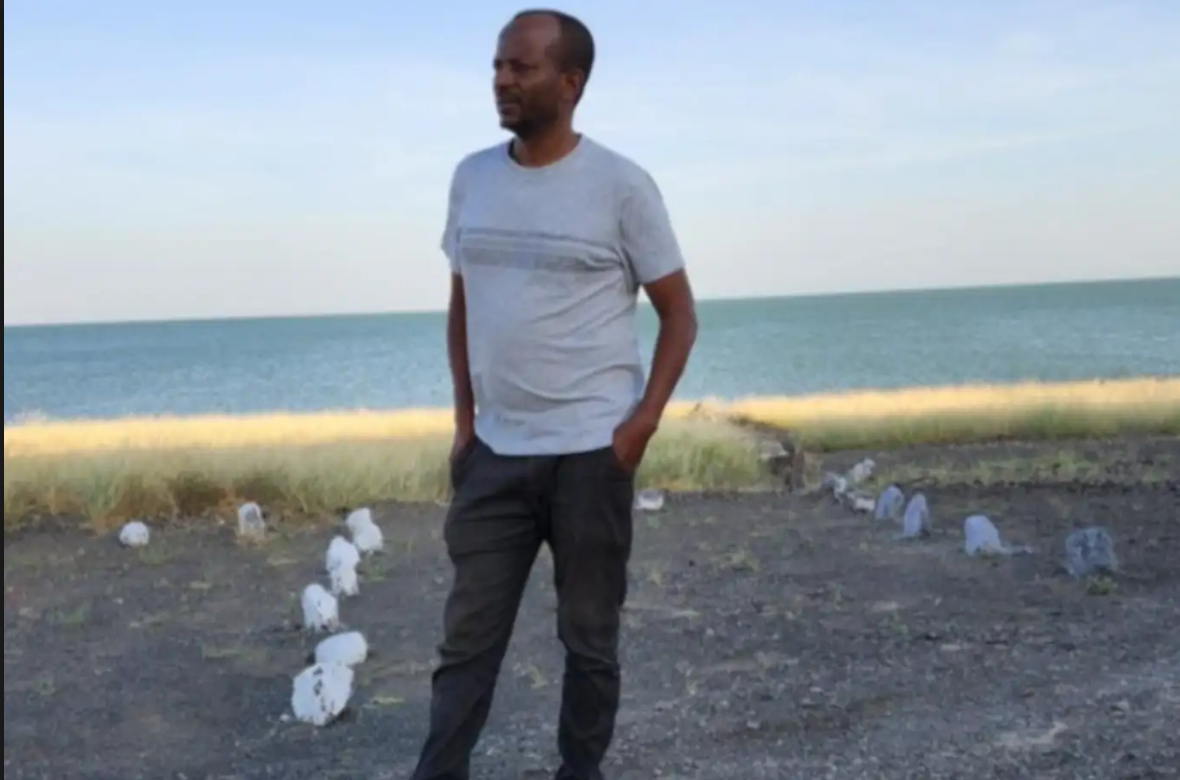
Kedir Teji Roba
Research Scholar: Water, Nutrition and Health Laboratory, Penn State University
My work focuses on the Human Biology Project at KFFS, which investigates how climate change affects food and water insecurity and overall population health, as well as how climate variability, lifestyle factors, and water salinity are associated with kidney damage in northern Kenya.
Matthew Skinner
Research Scientist, Department of Archaeogenetics, MPI-EVA
I am a palaeoanthropologist specializing in the morphological analysis of fossil hominin bones and teeth. Within the KFFS, I contribute to our efforts to conduct palaeontological surveys of vertebrate fossils and the description and publication of hominin remains.


Niguss Baraki
Postdoctoral Research at the Center for the Advanced Study of Human Paleobiology (CASHP), GWU
I am a postdoctoral researcher in the department of Anthropology (CASHP) at GWU, working in the Stone Age Archaeology Lab. My research in Koobi Fora focuses on investigating the origins of technology and its evolutionary implications for hominin paleobiology. Specifically, I explore how the emergence and development of stone tool technology relate to morphological changes in the hominin hand. I am also interested in examining how technological innovations coincide with environmental transformations. With this work, I aim to understand the broader evolutionary feedback between behavior, anatomy, and ecology in human evolution.
Kevin Hatala
Associate Professor of Biology, Chatham University
Kevin Hatala is a paleoanthropologist who blends field and laboratory experimental research approaches to study the evolution of human locomotion. He has conducted field research in the Turkana Basin since 2010. His most recent field projects have focused on the excavation and analysis of multiple ~1.4 to 1.6 million year old fossil footprint sites, to gain windows to hominin anatomy, locomotion, behavior, and environments.


Alfredo Rojas
Postdoctoral Scholar: Water, Nutrition and Health Laboratory, Penn State University
I work on the Daasanach Human Biology Project where we study the impact of water salinity on kidney function, hydration, and blood pressure. We work with Daasanach pastoralist communities conducting household surveys as well as collecting biomarker and environmental data.
Additional Staff by Speciality Area
Purity W. Kiura
Co-Director

Anna K. Behrensmeyer
Paleoecology Taphonomy

Stephen Merritt
Zooarchaeology

Russel Cutts
Archeology, Origins of Pyrotechnology
René Bobe
Paleoenvironmental Analysis

Jack Harris
Paleolithic Archaeology, Paleoanthropology

David B. Patterson
Paleoecology, Paleoenvironments

Susana Carvalho
Non-human primate archaeology
Additional Collaborators
The Main Partners of the Koobi Fora Field School are the George Washington University and the National Museums of Kenya. However, our faculty come from a broad variety of backgrounds and our research involves many different collaborators.
- University of Witwatersrand (Professor Marion Bamford)
- University of Cape Town Department of Archaeology
- Max Planck Institute for Evolutionary Anthropology (Human Evolution Department)
- Rutgers University Center for Human Evolutionary Studies
- Coastal Carolina University Anthropology and Geography
- Smithsonian Institution Paleobiology Program
- University of Alabama, Birmingham, Anthropology Department
- University of North Georgia Biology Department
- University of Nebraska, Lincoln, School of Applied Science
- University of Georgia Anthropology Department
- University of Pennsylvania College of Health and Human Development
- Duke University Evolutionary Anthropology
- Turkana Basin Institute Program